
Reading vs Watching: Which Helps People Learn Faster?


When people need to learn something new, one question comes up often: is it faster to read the information or watch a video?
There is no single answer that applies to every situation.
Reading can be better for detailed information, careful review, and precise reference. Video can be more useful when the topic involves processes, demonstrations, sequences, or concepts that benefit from visual explanation.
The most effective format often depends on what someone is trying to learn and how the information is presented.
Why Reading Still Works Well
Written material gives learners a high level of control.
A reader can slow down, reread a difficult paragraph, scan headings, highlight important details, and return to a specific section whenever needed.
This makes reading particularly useful for:
Detailed technical information
Definitions and terminology
Research material
Policies and procedures
Information that needs to be referenced later
Topics that require careful analysis
A well-structured document can also make it easy to move directly to the information that matters.
The main disadvantage is that long or dense material can require significant concentration.
A 40-page training manual or textbook chapter may contain valuable information, but learners can still become tired or lose track of the larger picture.
Why Video Can Feel Easier to Learn From
Video presents information in a guided sequence.
Instead of deciding what to focus on first, viewers are taken through the material step by step.
Visuals can also show relationships that may take longer to explain with text alone.
For example, a workflow described across several paragraphs might be easier to understand when viewers can see the steps appear in order.
Video can be especially useful for:
Step-by-step processes
Visual demonstrations
Training procedures
Complex systems
Educational explanations
Topics involving movement or sequence
This does not mean watching is automatically faster or more effective than reading. A poorly structured video can be just as difficult to follow as a poorly written document.
The quality of the explanation matters in both formats.
Reading and Watching Solve Different Problems Reading vs Watching
Instead of treating reading and video as competitors, it can be more useful to think of them as complementary formats.
Reading is often better when someone needs detail and precise control.
Video can be better when someone needs context, sequence, or a visual overview.
For example, an employee could watch a training video to understand the overall process and then use the written manual when they need exact instructions.
A student could watch a visual explanation of a difficult concept and return to lecture notes for more detailed study.
Using both formats can give learners more flexibility.
The Problem With Creating Videos From
Existing Material
Many organizations already have the information they need inside PDFs.
Training teams may have manuals and onboarding documents. Teachers may have course notes. Researchers may have papers and reports.
The difficulty is turning that written material into video.
Traditionally, this requires:
Reviewing the document
Writing a script
Planning scenes
Creating visuals
Recording narration
Editing everything together
For teams that already invested time creating the original document, rebuilding the same information for video can feel inefficient.
This is where AI document-to-video tools can help.
Turning Written Material Into Video With Explisera
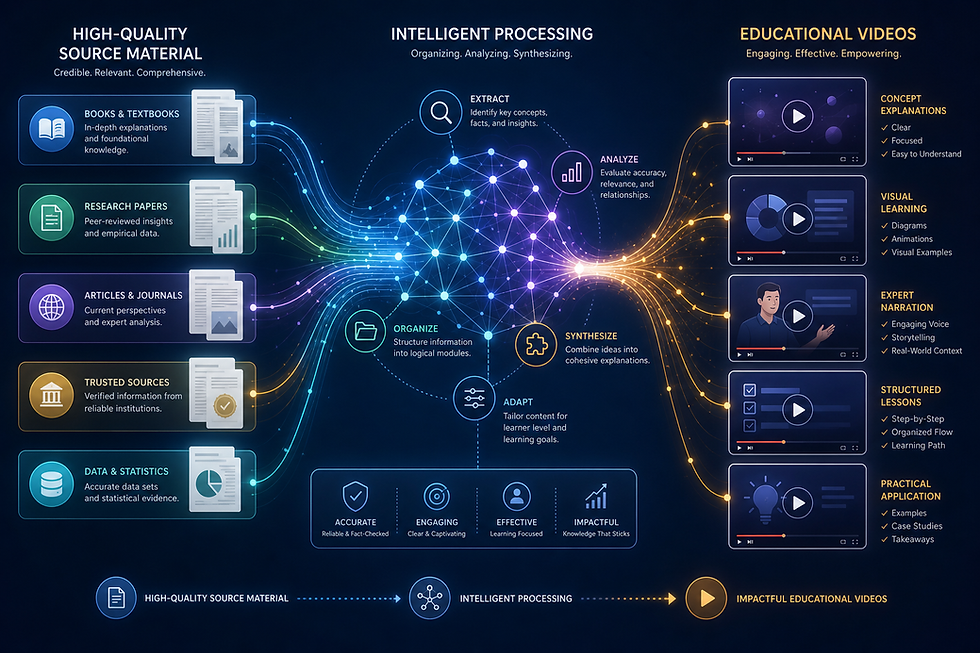
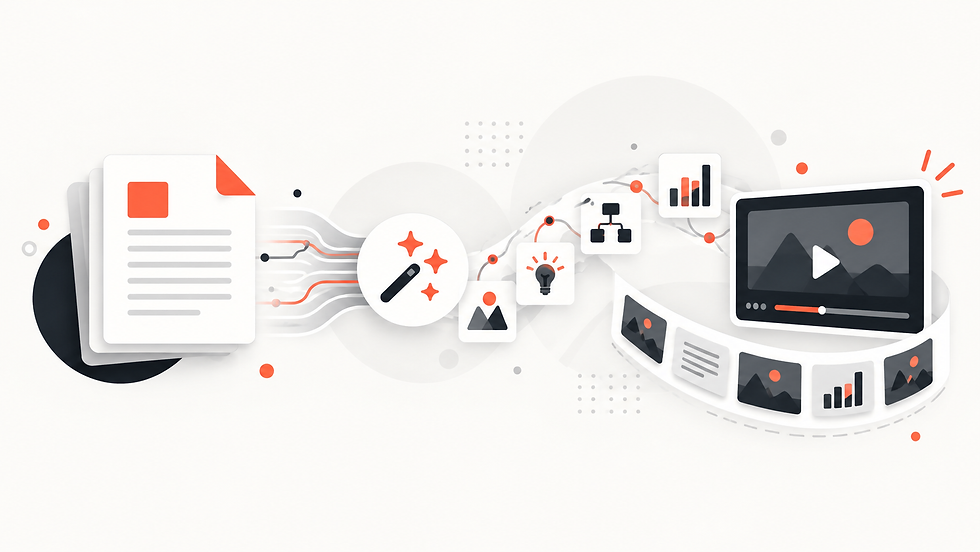
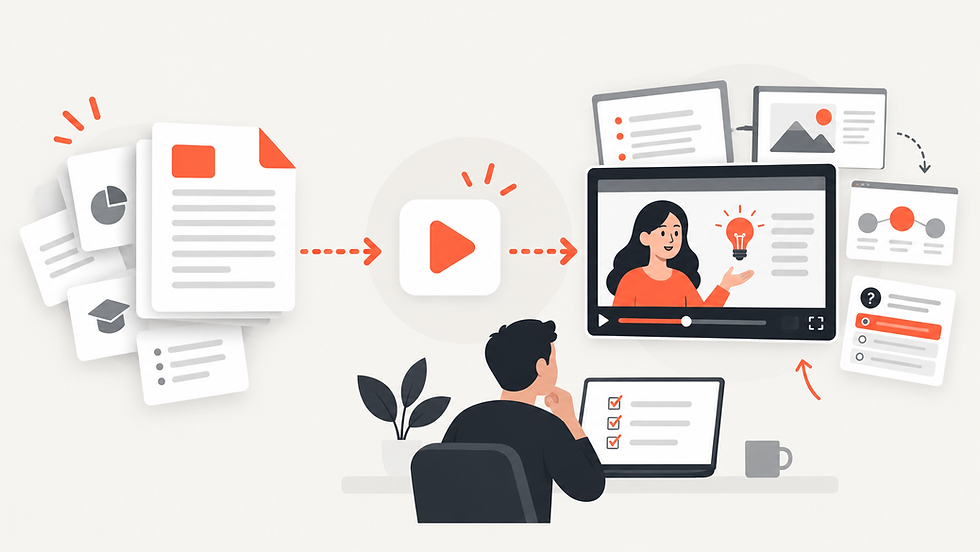
Explisera is designed to transform text-based PDFs into AI-generated videos.
The process is straightforward.
First, upload a PDF such as a textbook, training document, manual, research paper, or course notes.
Next, choose a visual direction that fits the material.
Explisera's Standard+ plan includes access to more than 72 visual styles, including whiteboard-style explainers, process-flow diagrams, minimalist illustrations, paper-cutout visuals, historical-inspired formats, and other presentation styles.
The platform then turns the source material into scenes and generates a cohesive video that can be reviewed and used alongside the original document.
Why This Can Be Useful for Learning
Turning a document into video gives people another way to consume the same information. Reading vs Watching
This can be valuable for:
Employees who need training in a more guided format
Students reviewing difficult course material
Teachers creating supporting learning resources
Researchers presenting complex information
Organizations repurposing existing documentation
The original PDF does not need to disappear.
Instead, the video can provide a visual entry point while the document remains available for deeper reading and reference.
Benefits of Using Explisera
Explisera focuses specifically on making PDF-to-video creation simpler.
Its features include:
AI PDF-to-video generation
Automated video scenes
More than 72 visual styles with Standard+
Support for textbooks, manuals, training documents, research papers, and course notes
Support for longer PDF projects on Standard+
Higher monthly generation capacity
Priority generation for Standard+ users
A free plan with no credit card required to start
This gives users a way to experiment with adding video to existing learning material without starting with traditional video production tools.
So, Is Reading or Watching Faster?
Neither format is always faster.
Reading gives learners precision and control. Video provides guided pacing and visual context.
The better choice depends on the material, the learner, and the goal.
For many situations, the strongest approach is not choosing one over the other. It is giving people access to both.
With tools such as Explisera, existing PDFs can become visual videos, making it easier to offer the same information in more than one format and allowing learners to choose the method that works best for them.
Comments