
Why Good Educational Videos Start With Good Source Material

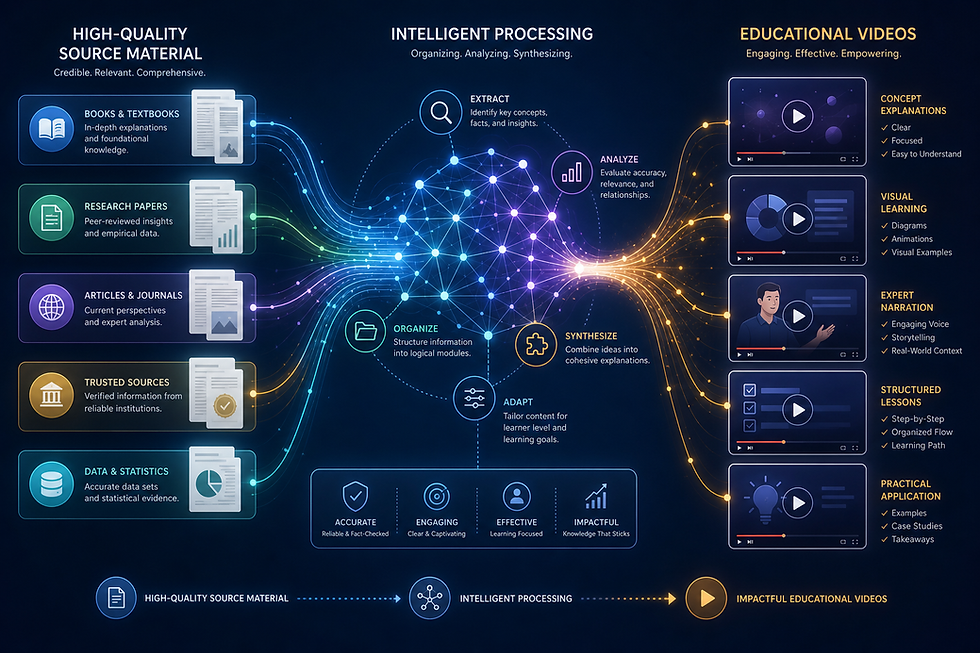
Creating educational videos that are clear, accurate, and engaging begins long before the camera rolls or the screen is recorded. The core of any effective educational video is the source material it is based on. Whether you're transforming textbooks, research papers, manuals, or course notes, starting with high-quality source content is essential to produce videos that truly enhance learning.
Poor source material can compromise the entire educational experience. It leads to inaccuracies, confusing visuals, and a lack of coherence, which ultimately hampers understanding. Conversely, well-prepared source material ensures that your videos are reliable, concise, and tailored to your learners' needs.
In this article, we explore why good source material is the foundation of effective educational videos, how to diagnose weak sources, and the steps you can take to improve your content quality.
What is Source Material and Why Does It Matter?: The Importance of Quality Source Material The Importance of Quality Source Material
Source material refers to the original content used as the basis for your educational videos. It can include textbooks, research articles, training manuals, lecture notes, or any document containing the information you want to convey.The Importance of Quality Source Material
The quality of this material directly influences the clarity and accuracy of your video. High-quality source material is well-structured, factually correct, and comprehensive enough to cover the necessary topics without extraneous information.
Why is source material critical?
• Accuracy: Ensures the information presented is correct and trustworthy.
• Clarity: Provides a clear framework for structuring your video content.
• Efficiency: Reduces the need for extensive editing or re-recording.
• Engagement: Facilitates the creation of visuals that support understanding.
Diagnosing Weak Source Material: Common Pitfalls
Before transforming content into an educational video, it’s vital to evaluate your source material. Weak or poorly prepared sources can lead to ineffective videos.
Common issues include:
• Outdated information: Using data or concepts that have been superseded.
• Lack of structure: Disorganized content that makes it difficult to create a logical flow.
• Inaccuracy: Errors or inconsistencies that can mislead learners.
• Overly complex language: Technical jargon or dense text that hampers comprehension.
• Incomplete coverage: Missing key concepts or details necessary for understanding.
Diagnostic checklist:
1. Is the information current and verified?
2. Is the content organized logically?
3. Are there factual errors or inconsistencies?
4. Does the material align with your learning objectives?
5. Is the language appropriate for your target audience?
How Poor Source Material Impacts Video Quality and Learning
Transforming poor source material into a video often results in:
• Confusing visuals: Mismatched or cluttered graphics that do not support the content.
• Misleading information: Errors that propagate through the video, leading to misconceptions.
• Reduced engagement: Frustration or boredom due to unclear or irrelevant content.
• Increased production time: More editing and rework to correct issues.
Ultimately, these issues diminish the educational value and can discourage learners from engaging further.
Ensuring High-Quality Source Material for Your Videos
To produce effective educational videos, start with these steps:
1. Select reputable sources: Use textbooks, peer-reviewed articles, and official manuals.
2. Verify facts: Cross-check information with multiple authoritative sources.
3. Organize content: Create outlines or mind maps to structure your material logically.
4. Simplify language: Rewrite complex sections in clear, accessible language.
5. Highlight key points: Focus on essential concepts to keep videos concise.
6. Update regularly: Ensure your source material reflects the latest knowledge.
By investing time in preparing your source material, you lay a solid foundation for creating engaging, accurate, and effective educational videos.
How Explisera Transforms PDFs into Educational Videos
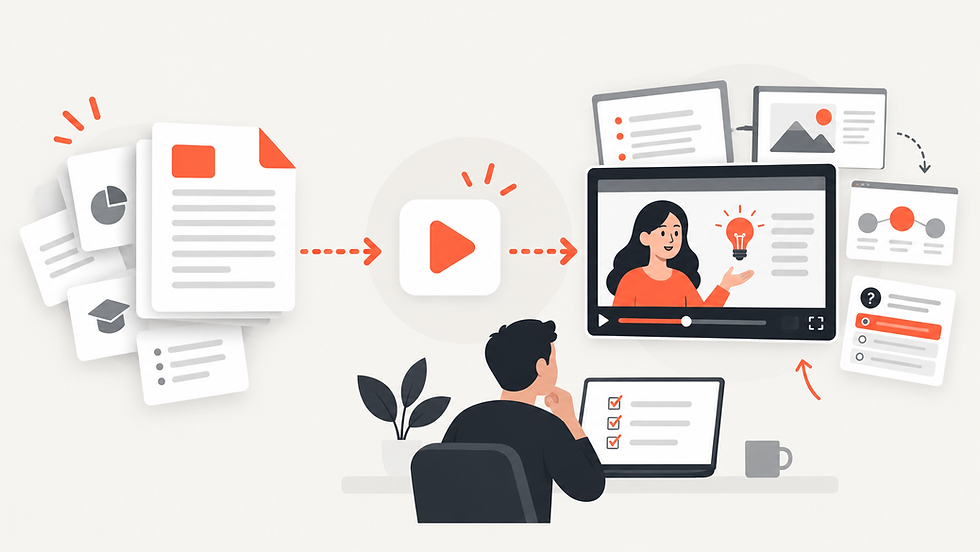
Explisera is an AI-powered platform designed to streamline this process. Users upload PDFs—such as textbooks, training manuals, or research papers—and choose from over 72 visual styles to generate structured videos.
This platform ensures that your source material is transformed into clear, visually appealing videos that support visual learning. Because Explisera works directly from your PDFs, the quality of your source material remains paramount.
Starting with well-prepared PDFs guarantees that the AI can accurately interpret and visualize your content, resulting in videos that are both informative and engaging.
Elevate Your Educational Content with Better Source Material
The importance of good source material cannot be overstated. It influences every stage of video creation, from scripting to visualization, and ultimately determines the effectiveness of your educational content.
Invest in quality sources, verify facts, and organize your content before turning it into videos. Platforms like Explisera make it easier to convert well-prepared PDFs into compelling visual lessons, but the foundation remains your source material.
By starting strong, you ensure your educational videos are reliable, engaging, and truly supportive of learners’ success.

Comments